
Types of Palm Trees
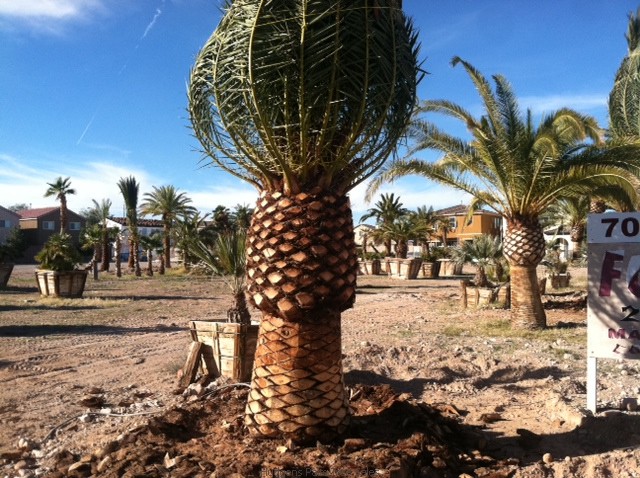 |
Canary Island PalmPhoenix Canariensis Phoenix Canariensis has been utilized as a theme generating focal point in landscapes worldwide for decades. Its majesty and substantial presence make the Canary Island Date Palm a powerful choice where you a looking to bring natural maturity to a site. Utilized in rows or as a freestanding centerpiece, there really aren't many locations on site where you cannot use Canariensis successfully. Probably the best adjective that one could use to describe Canariensis is Stunning. If you get through the establishment period sane, and provided you maintain it with reasonable diligence, your Canary will probably outlive you and will be a truly stunning addition to the family. |
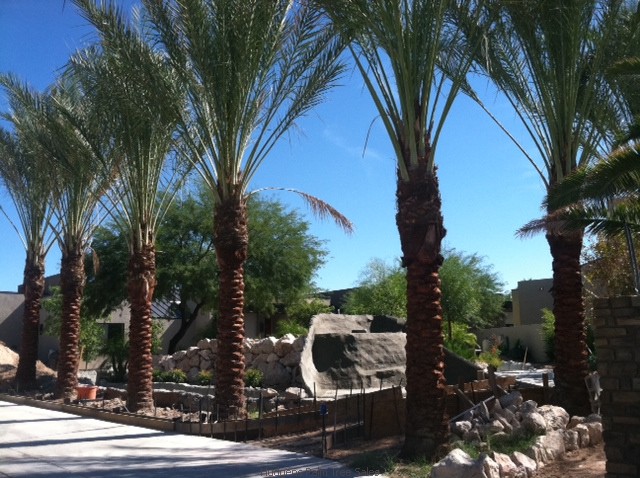 |
Date PalmPhoenix Dactylifera Medjool Medjool Date palms make a grand statement no matter how you use them. We utilize them as freestanding specimens to create focal points in the landscape and in staggered height plantings that generate eye-catching extravaganzas of natural beauty. |
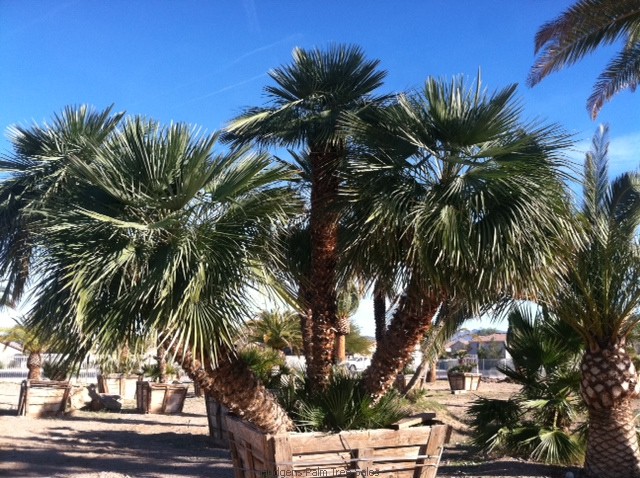 |
Med PalmChamaerops Humilis This hardy fan palm occurs throughout the Mediterranean region, from coastal zone to over 3000 ft. in elevation, and in various types of vegetation. It is highly prized in warm temperature areas where few palms are reliably winter hardy, and a large clump makes a striking specimen plant. The variation in leaf color and habit is extraordinary. It's slow rate of growth allows this palm to be grown in a large container for many years. Growth of C. humilis is best in full sun, but it also retains and excellent appearance in light shade. |
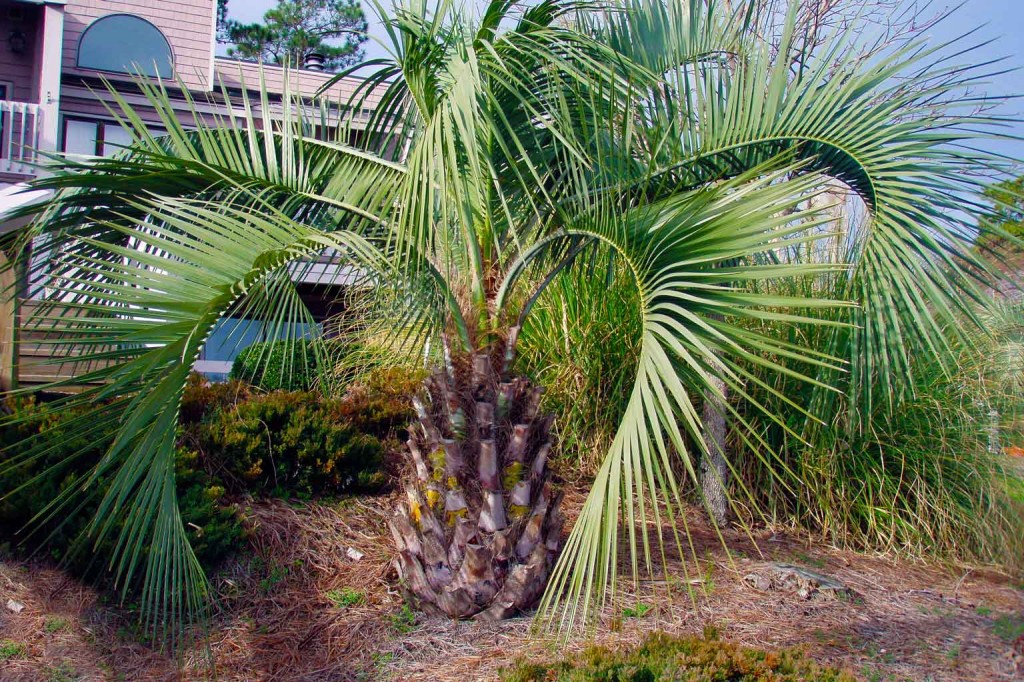 |
Pindo PalmButia Capitata Pindo palm is the hardiest feather-leafed palm currently in wide cultivation. It functions well in median and avenue plantings, despite it's relatively small stature. This species is considerably variable in nature, the forms differing in ultimate height, trunk thickness, leaf color and amount of arching, and fruit color and taste. The best quality pindo fruits are very sweet with flavor some find reminiscent of a pineapple/banana mixture. The fruit makes a tasty jelly. |
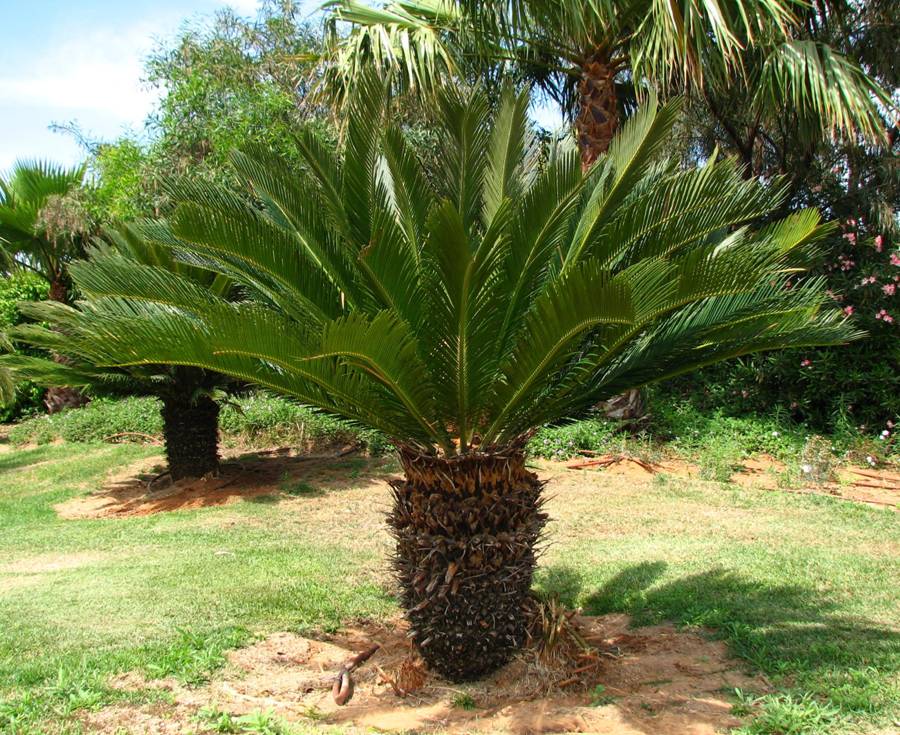 |
Sago PalmCycas Revoluta Cycas revoluta, one of the most primitive living seed plants, are very unusual and popular ornamentals. A rugged trunk, topped with whorled feathery leaves has lead to the common name "Sago Palm", however it is actually related to conifer and Ginko trees - all cone bearing plants which trace their origins back to the ancient flora of the early Mesozoic era. Often called "living fossils", Cycads have changed very little in the last 200 million years. |
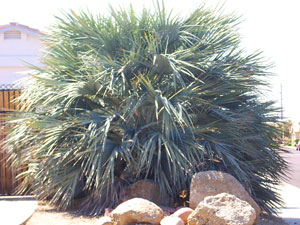 |
Blue PalmBrahea Armata Distinctive, unique and attractive, the blue hesper palm has a crown of rigid leaves which radiate from the trunk top. Blue hesper palms are considered by many to have the bluest leaves of any palm in the world. The leaves of a hesper palm may also be pastel bluish white or aquamarine in color. |